
Wisdom teeth, also called third molars, are the last permanent teeth to develop and usually appear between the late teens and early twenties. Because the jaw may not have enough room for these teeth to grow properly, they can become impacted, meaning they are unable to fully erupt into their normal position. Wisdom tooth impaction can occur in different directions and positions.
This resource by our expert dentist in Round Rock helps understand different types of wisdom tooth impaction along with symptoms, potential complications, and why a dentist may recommend monitoring or wisdom tooth removal.
What Is A Wisdom Tooth Impaction?
A wisdom tooth is considered impacted when it does not have enough space to erupt normally or becomes trapped beneath the gum or against another tooth.
Some impacted wisdom teeth cause no noticeable symptoms and may simply be discovered during a dental imaging. Others can contribute to:
- Pain,
- Swelling
- Gum infections
- Tooth decay
- Damage to neighboring teeth
Important Note: Dentists generally classify impacted wisdom teeth based on their position and angle of growth.
Different Types Of Wisdom Tooth Impaction
1. Mesial Impaction
Mesial Impaction, the most common type of wisdom tooth impaction. The tooth may remain partially erupted or become stuck against the neighboring molar. A mesially impacted wisdom tooth is angled toward the front of the mouth, usually leaning toward the second molar.
Important Note: Because food and bacteria can collect around the partially erupted tooth, mesial impaction may increase the risk of gum inflammation and decay.
2. Distal Impaction
A distally impacted wisdom tooth is tilted toward the back of the mouth, away from the second molar. This type of impaction is generally less common than mesial impaction. Depending on the angle and available space, the tooth may remain partially or completely beneath the gum.
Important Note: A dentist may recommend monitoring the tooth if it is not causing problems, while tooth removal may be considered if there is pain, infection, decay, or other dental concerns.
3. Vertical Impaction
In vertical impaction, the wisdom tooth remains relatively upright and follows a direction similar to a normally erupting tooth, but it cannot fully emerge because there is insufficient space.
Although the tooth may appear properly aligned on an X-ray, it can still be trapped beneath the gum or bone.
Important Note: Some vertically impacted wisdom teeth remain symptom-free, while others can cause problems if they become partially erupted or difficult to clean.
4. Horizontal Impaction
A horizontally impacted wisdom tooth is positioned almost sideways with the crown facing toward the neighboring second molar. Because of its position, the tooth cannot erupt normally and may press against the adjacent tooth.
Horizontal impaction can sometimes contribute to
- Pressure
- Discomfort
- Gum problems
- Damage to the neighboring molar
Important Note: Your dentist can evaluate the position using dental X-rays or CBCT Imaging and determine whether dental treatment is necessary.
5. Soft Tissue Impaction
A soft tissue impaction occurs when the wisdom tooth has erupted through the jawbone but remains partially or completely covered by gum tissue. Food particles and bacteria can become trapped beneath the gum flap around the tooth. This may make the area difficult to clean and can contribute to inflammation or infection.
Important Note: Depending on the condition of the tooth and surrounding tissues, your dentist may recommend observation, improved dental cleaning, or removal.
6. Partial Bony Impaction
A partially bony impacted wisdom tooth is partly covered by the jawbone and partly exposed through the gum. Because part of the tooth is visible, it may be possible for bacteria and food debris to collect around it. This can increase the likelihood of gum inflammation and other dental problems.
Important Note: Treatment depends on factors such as the tooth's position, symptoms, surrounding bone, and the health of nearby teeth.
7. Complete Bony Impaction
A complete bony impaction occurs when the wisdom tooth is completely enclosed within the jawbone. The tooth may not be visible inside the mouth and is typically identified through dental imaging. Some completely impacted wisdom teeth never cause symptoms, while others can develop problems over time.
Important Note: Professional dentists may recommend periodic monitoring or wisdom tooth removal depending on the tooth's position and potential risks.
8. Smoking and Gum Health
Smoking is one of the top causes of gum bleeding, but ironically, it can mask symptoms like bleeding because it reduces blood flow to the gums. When people quit smoking, bleeding may start as their gums begin to heal and become more responsive. If you smoke and notice gum bleeding, it may be a sign of improvement or disease coming to light.
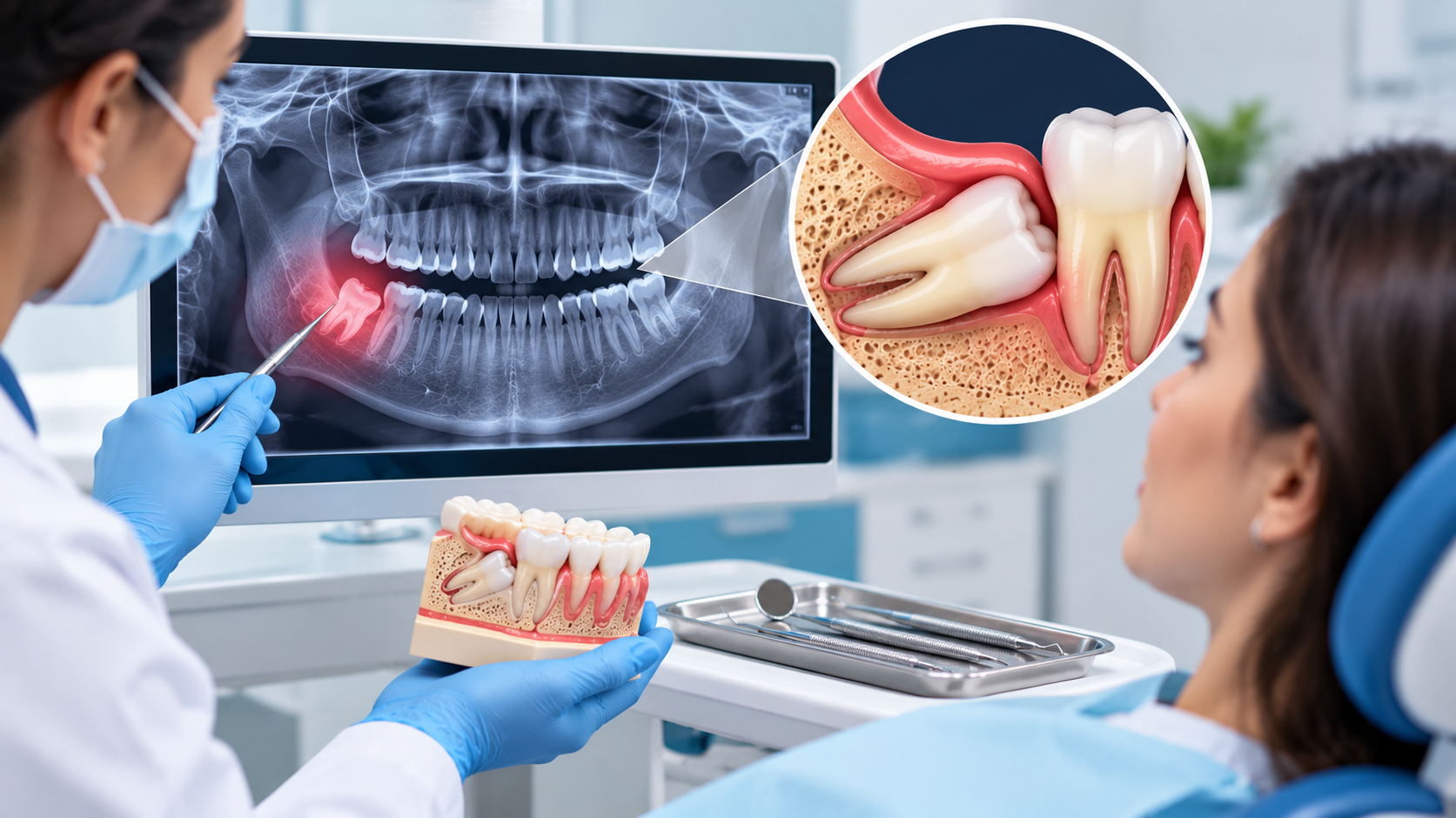
How Is Wisdom Tooth Impaction Diagnosed?
A dentist usually evaluates your teeth and gums and may recommend dental X-rays to determine the position of the wisdom tooth. An X-ray can help show:
- The angle of the wisdom tooth
- How deeply it is positioned
- Whether it is covered by bone or gum tissue
- Its relationship to neighboring teeth
- Whether there are signs of infection or other complications
Important Note: Based on the examination and imaging, a professional dentist can determine whether the wisdom tooth should be monitored or treated. CBCT Imaging (Cone Beam Computed Tomography) can be used to evaluate damaged, impacted, or problematic wisdom teeth, particularly when a standard dental X-ray doesn’t provide enough information.
How We Can Help You?
Mayfield Ranch Dental can help evaluate your wisdom tooth impaction, determine its position and condition, and recommend the most appropriate dental treatment based on your individual needs. Depending on the severity and type of impaction, treatment options may include:
- Monitoring
- Professional Teeth Cleaning
- Gum Treatment
- Wisdom Tooth Treatment
- Surgical Extraction
For more info and a personalized treatment, contact our affordable dentists in Round Rock today!

Share this :
Frequently Asked Questions
1. What is the most common type of wisdom tooth impaction?
Mesial impaction is commonly seen and occurs when the wisdom tooth tilts forward toward the second molar. However, the type and position of impaction can vary from person to person.
2. Does every impacted wisdom tooth need to be removed?
No. Some impacted wisdom teeth can be monitored if they are healthy, symptom-free, and not causing damage to nearby structures. Removal may be recommended when there are problems such as infection, decay, pain, or damage to adjacent teeth.
3. Can an impacted wisdom tooth erupt normally later?
Some wisdom teeth may continue to erupt if sufficient space becomes available, but many impacted teeth remain trapped. A dentist can assess the tooth’s position and eruption potential using an examination and X-ray.
4. Is wisdom tooth impaction dangerous?
An impacted wisdom tooth is not necessarily dangerous, but it can sometimes contribute to infection, tooth decay, gum problems, cyst formation, or damage to neighboring teeth. Regular dental evaluation can help identify potential complications early.
5. How do I know if my wisdom tooth is impacted?
Pain, swelling, gum irritation, or difficulty cleaning the area can occur with an impacted wisdom tooth, but some people have no symptoms. A dental examination and X-ray are usually needed to confirm impaction.