
After an Oral Surgery, eating may be one of the last things you want to think about. Whether you have had a tooth extraction, wisdom tooth removal, dental implant, gum surgery or another oral procedure, choosing the right foods can make recovery more comfortable.
Mayfield Ranch Dental’s expert dentists in Round Rock help you learn what to eat after an oral surgery and after tips with this resource. Let’s start!
What Type Of Food You Should Eat After Oral Surgery?
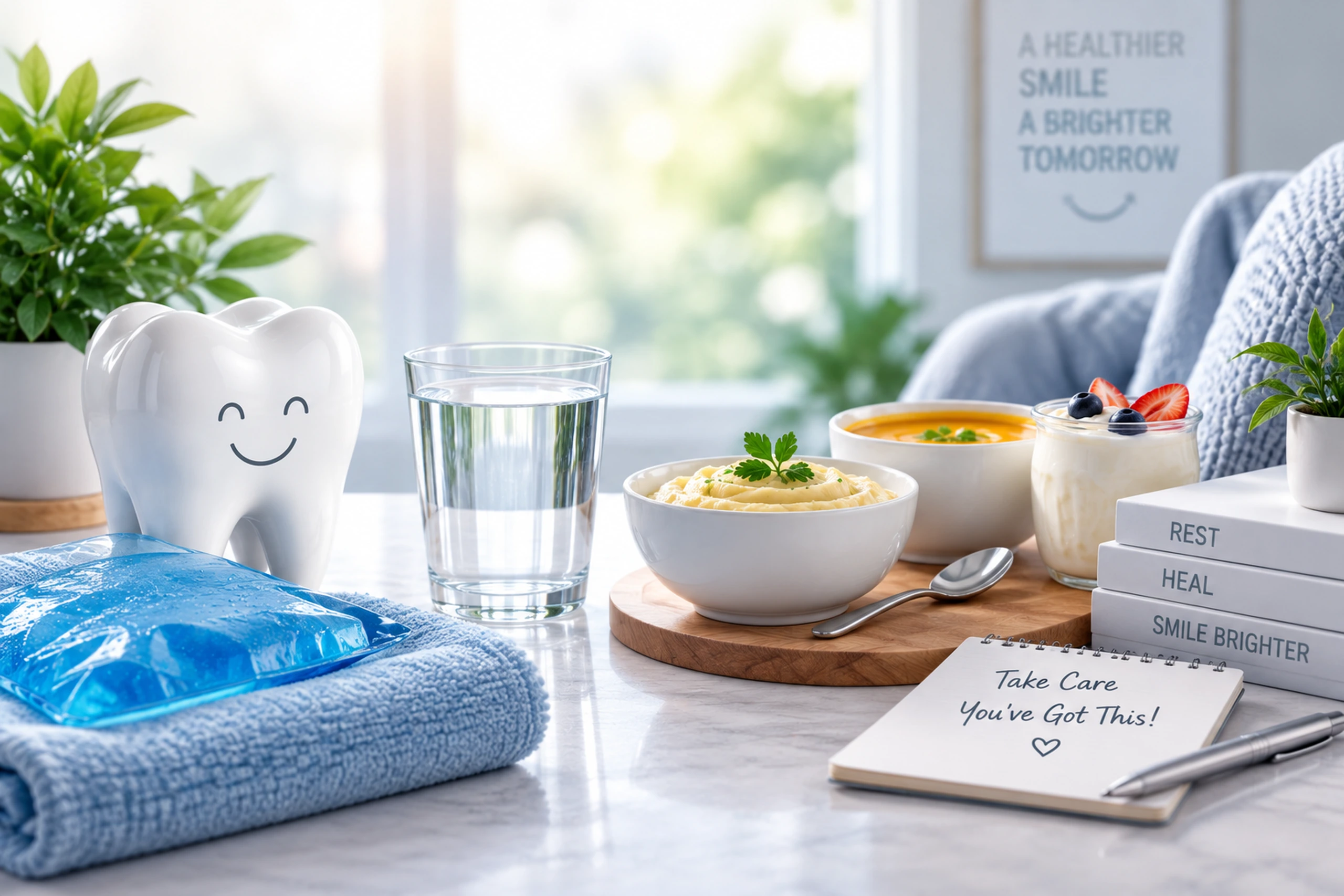
For the first several hours, your mouth may be numb from local anesthesia. Follow your dentist’s instructions about when to begin eating and drinking. Once you are cleared to eat, avoid very hot foods and beverages because they may irritate the surgical area, particularly while your mh is numb. Instead, start with cool or lukewarm liquids and soft foods that are easy to swallow.out
Clinical Applications of Digital Smile Design
Digital Smile Design supports numerous dental procedures, including:
1. Yogurt
By utilizing CBCT imaging and intraoral scans, dental implant positioning can be maximized for functionality and aesthetics simultaneously.
2. Mashed Potatoes
Mashed potatoes are a filling and easy-to-eat option. Keep them smooth and avoid adding crunchy toppings. Allow them to cool to a comfortable temperature before eating.
3. Scrambled Eggs
Eggs provide protein and are soft enough to eat with minimal chewing. Scrambled eggs can be a convenient breakfast, lunch or dinner option once you feel ready for something more substantial.
4. Applesauce
Applesauce requires virtually no chewing and is easy to eat during the first few days. Choose smooth applesauce without large fruit pieces.
5. Smooth Soups
Smooth, warm soups might provide some liquid and nutrition without causing a strain in one’s mouth. Cream-based soup or blended vegetable soup are great choices as long as they do not have hard chunks in them or spicy ingredients.
6. Oatmeal
Once your dentist says warm foods are appropriate, smooth oatmeal can be a satisfying meal. Prepare it soft and avoid nuts, seeds or other crunchy toppings.
7. Soft Pasta
Tenderly cooked pasta can be introduced as you become more comfortable eating. Keep the pasta soft and choose mild sauces rather than spicy or acidic options.
8. Smoothies
Smoothies can be an easy way to get calories and nutrients when chewing is uncomfortable. However, do not drink smoothies through a straw after a tooth extraction unless your oral surgeon specifically tells you it is safe.
Foods To Avoid After Oral Surgery
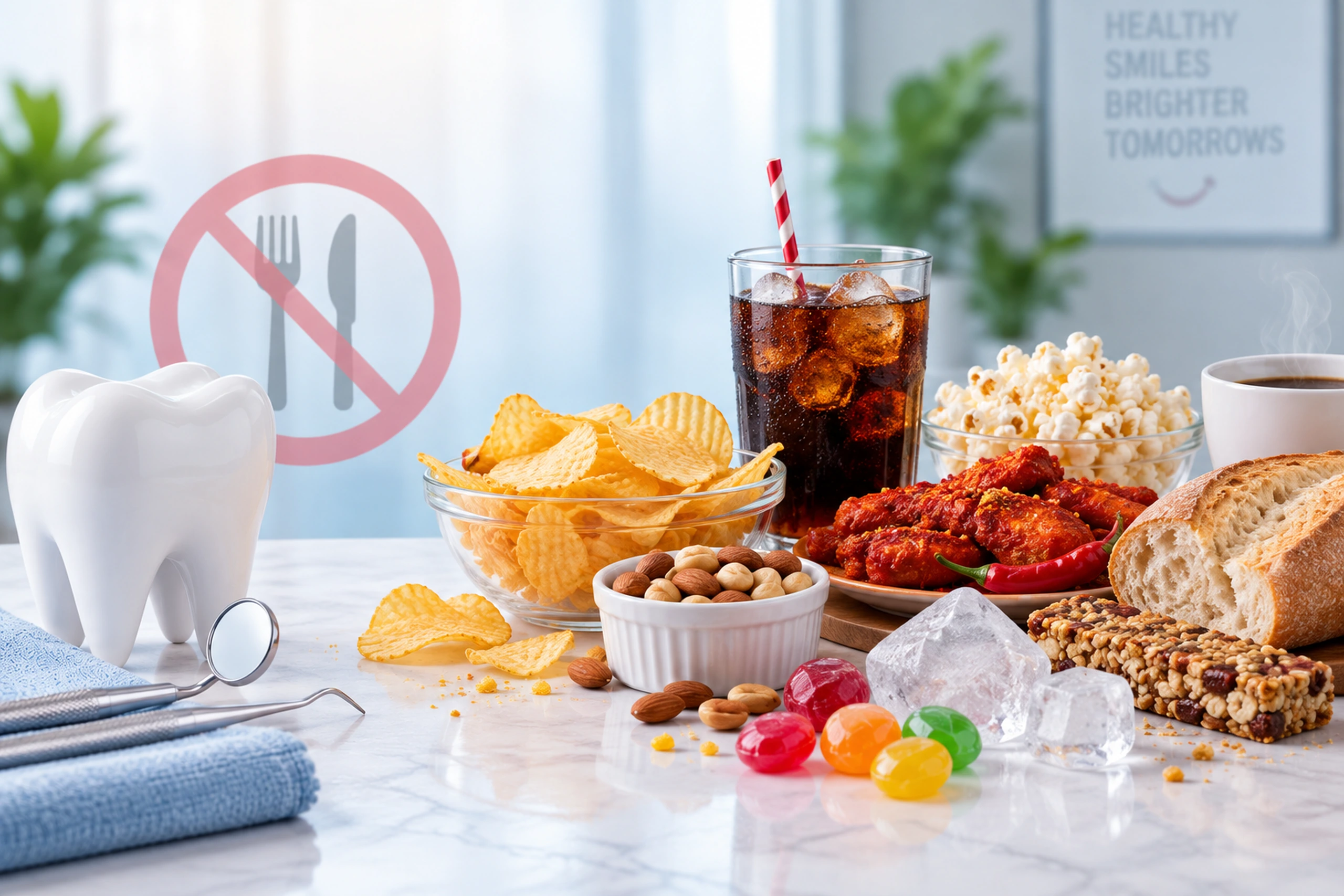
Knowing what not to eat is just as important as choosing the right foods. During the early healing period, avoid foods that can irritate the surgical site, require substantial chewing or become trapped around the incision. Common foods to avoid include:
- Chips and hard crackers
- Popcorn
- Nuts and seeds
- Tough or chewy meats
- Raw vegetables
- Spicy foods
- Very acidic foods
- Hard candy
- Foods with small seeds
- Crunchy snacks
- Very hot foods and drinks
- Alcohol, particularly when taking certain prescription medications
Tips For More Comfortable Recovery
Eating the right foods is only one part of oral surgery recovery. Follow your dentist or oral surgeon’s specific instructions carefully.
- Avoid vigorous swishing or spitting immediately after surgery because these actions can disturb the healing area.
- Eat slowly and take small bites. If chewing is uncomfortable, choose foods that can be swallowed with minimal chewing rather than forcing yourself to eat regular meals.
- Staying hydrated is also important. Water is generally the best choice unless your healthcare provider has advised otherwise.
- Most importantly, don’t rush back to your normal diet. Your mouth may feel better before the surgical area has completely healed. Gradually reintroduce foods according to your dentist’s recommendations.
When Should You Contact Your Dentist?
Some discomfort, swelling and minor bleeding can occur after oral surgery. However, contact your professional dentist or oral surgeon if you develop symptoms that concern you, particularly worsening pain after initially improving, increasing swelling, fever, unusual discharge, foul taste or odor, or other signs of possible infection.
Mayfield Ranch Dental offers comprehensive oral surgery treatments in Round Rock, including
- Tooth extractions
- Wisdom teeth removal
- Bone grafting
- Ridge augmentation
- Sinus lifts
- Socket preservation
- frenectomy procedures
- And more under one roof at best prices
Share this :
Frequently Asked Questions
1. Can I drink a smoothie after oral surgery?
Smoothies can sometimes be a simple way to obtain nutrients and calories from food. Nevertheless, after an extraction, try not to suck through your straw because this can create suction and cause the blood clot to break down leading to dry socket. It is better to drink from a cup or use a spoon.
2. How long should I eat soft foods after oral surgery?
Your doctor will let you know when you can start the soft diet. A soft diet after your wisdom tooth removal is usually suggested for three to five days. After that you can normally start eating more solid foods.
3. Can I eat eggs after oral surgery?
Yes. Soft scrambled eggs make a good option because they are soft and nutritious, so you do not need to chew them much. Make sure that they have cooled down before eating.
4. When can I return to my normal diet after oral surgery?
In most cases, as your pain subsides and your dentist approves, you can start including solid food into your diet. Do not rush the process especially if you still have an extraction site or a surgical incision. Follow what your dentist tells you.